Thursday 17 December, 2009

Christmas Special Podcast 2009

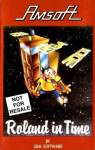
The beautiful Amstrad CPC 6128k. With colour monitor.

It’s the 101 Video Games That Made My Life Slightly Better Christmas Special Podcast! Listen as we ramble about games we got at Christmas, games that Lewis played this year that Ian didn’t, Gants Hill roundabout, Avatar, Guy Ritchie and Batman. A lot about Batman.

Click above to listen directly through this site or click below to listen/download in your media player of choice:

Podcast 2 Christmas Special 2009

Batman on the Amstrad CPC 6128k

Wednesday 16 December, 2009

#40: NBA Jam

Format: Super NES Genre: Sports Released: 1993 Developer: Midway

You’ve probably noticed that there are precious few sports games on this list – the reason being that I hardly ever play them. I’ve never quite been able to get to grips with football games (people I’m playing against often wonder why I cheer when they score – it’s usually because I thought I was controlling their team), and the only sports game that has successfully piqued my interest in recent memory is Golf on Wii Sports. Back in 1993 though, you’d have had to pry the joypad out of my hands with a crowbar to stop me playing NBA Jam.

It’s not like I even like basketball – in fact I find it incredibly boring – but somehow this game managed to make basketball not only bearable to watch but actually exciting. Its first stroke of genius was to get rid of all those surplus players on the court – with only two players per team there’s none of the usual confusion you get with sports games over which player you’re controlling and where they’re going to pass the ball next and hold-on-I-didn’t-mean-to-pass-it-over-there-damn-you-computer-for-cheating-oh-now-you’ve-gone-and-scored DAMN THIS MACHINE. No, none of that.

The second wave of the genius wand ensured that all of the gameplay knobs were turned up to eleven – you don’t just slam dunk the ball in this game, you leap 30 feet into the air, spin 360 degrees, do the splits and dunk the ball so hard the backboard shatters, as multiple flashbulbs erupt in the audience and the announcer builds himself into a frenzy.

Realistic? No, but who cares, this is a video game, right?

"BOOMSHAKALAKA!"

Speaking of the announcer, the sampled speech was a real highlight – speech was rarity in games before the CD-based consoles arrived. As I remember, the announcers didn’t have that many soundbites, but for some reason they never got repetitive (maybe I was still tickled by the novelty of people speaking IN A GAME). The best bit was when a player scored three points in a row, which caused him to (literally) become ‘on fire’, accompanied by the commentator booming “HE’S ON FIRE!”. The phrase has penetrated my brain to such an extent that I still find myself thinking “HE’S ON FIRE!” every time I do something noteworthy in a game.

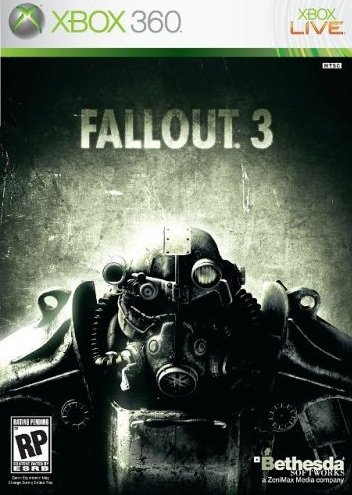
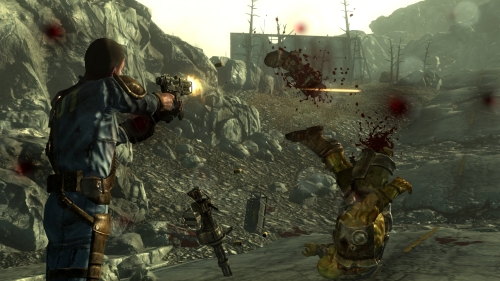
‘Achievement: Brumak Rodeo 10G’

[Thinks] “HE’S ON FIRE!”

"HE'S ON FIRE!"

But the true brilliance of NBA Jam emerged in multiplayer – the game was good when played alone, but it was utterly fantastic with four players. Along with Super Bomberman, it was one of the first games to be compatible with the Super NES multitap – imagine kids, you had to fork out £20 just to play with more than person! – and the two games barely left my SNES for the whole of 93 and 94. You can keep your Modern Warfare 2, just give me NBA Jam, four controllers, a bottle of Virgin Cola, Maid Marian and her Merry Men on the telly and several flavours of Push Pops, and I’ll be happy.

Lewis

Thursday 19 November, 2009

#39: Ring of Red

Format: Playstation 2 Genre: Turn-Based Tactics/Mech Game Released: 2000 Developer: Konami

It was surprisingly difficult to buy computer games in Japan – in fact, in the two years I lived there I only bought a handful of PS2 games. That’s not so say that games weren’t easily available – my local electronics store was crammed to the rafters with them – but actually finding games that only required a basic understanding of Japanese was a demanding task.

I found that the vast majority of video games in Japan were either RPGs or sports titles: unfortunately, the masses of Japanese dialogue ruled out the RPGs, and sports games have never really interested me (and especially not baseball games, which are hugely popular in Japan). The remainder was made up of popular Japanese series such as Devil May Cry and Metal Gear Solid, along with various manga crossovers (such as Naruto) and creepy dating games. Western staples, such as FPSs and driving games, only constituted a tiny minority, and my gaming diet in Japan mostly consisted of the odd Western import (Medal of Honor, Burnout 3) and a smattering of oddball Japanese titles (Katamari Damacy, Mr. Mosquito 2).

Infantry are key to success - your mech is almost helpless without their support.

After dejectedly ploughing my way through Medal of Honor: Rising Sun (not recommended), I was in the mood for something a bit different, which was when I came across Ring of Red. I bought it on a whim, and was surprised when it turned out to be one of the most interesting and compelling games I’ve played. It’s set in an alternative version of the 1960s where Japan didn’t surrender and WW2 dragged on into a protracted land war – which inevitably involved the development of mechs (this is Japan after all). After WW2 Japan was separated into Communist North Japan and Democratic South Japan, and the game starts as tension between the two sides is beginning to build (you can read more about the plot here).

Some of the mechs are capable of melee combat.

The mechs in this game are wonderfully primitive machines, all whirring cogs and smoking exhausts, and their movements are delightfully clunky and noisy, which makes a change from the sleek, futuristic machines found in most other mech games. Battles are turn-based, but each turn is governed by a strict time limit, so the action never really lets up. As with almost all turn-based strategy games, the core experience is basically two sets of stats gradually being reduced until one side has zero, but the game does an admirable job of papering over this with various strategic choices and special moves. One of the best features is aiming the cannon on your mech: the screen switches to the view of a target hovering wildly over the enemy, accompanied by the sound of your heartbeat; the longer you wait, the less erratically the target moves, but wait too long and you risk the enemy firing back. It’s a neat system and it really helps to build tension.

One of the long-range artillery mechs - basically a massive gun on legs.

The major downside is the repetition – inevitably the skirmishes get a little samey, although unlocking special moves keeps things interesting as you play on. The most frustrating thing about the game was not being able to understand the dialogue, but I managed to get the gist of what was going on… most of the time at least. Although I’m still not quite sure what happened at the end. In fact, the ending was a little abrupt in my opinion, which was annoying considering the amount of time I’d spent getting there. But then again I’ve seen much worse – the Playstation version of GTA2 springs to mind. It didn’t even have a cut scene at the end, just a black screen with the words ‘Game Over – Thank you for Playing!’

Tsk.

The lightweight mechs rely heavily on infantry support.

I can’t put my hand on my heart and say that Ring of Red is one of the best games ever made, but then that’s not the point of this list. In an ocean of lacklustre manga spin-offs, endless baseball sims and dodgy games featuring scantily-clad Japanese schoolgirls on their covers, Ring of Red was a beacon of hope – and for that it deserves celebrating.

Lewis

Monday 16 November, 2009

#38: Cannon Fodder

Format: Amiga Genre: Real-Time Tactics Released: 1993 Developer: Sensible Software

[Two of The Four Cyclists of the Apocalypse (the only minor deities committed to a programme of rigorous consumer testing) are drinking tea.]

FIRST CYCLIST: Another biscuit?

SECOND CYCLIST: Don’t mind if I do. Now let me see… Bourbon I think. [Sound of munching.] Mmmm.

Cannon_fodder_box_art

[The THIRD CYCLIST enters.]

THIRD CYCLIST: Morning chaps! It’s a lovely day out on the ethereal plane, you should go for a ride. Oooh, are those biscuits? [Takes custard cream.]

FIRST CYCLIST: I would do, but I’m getting my bike resprayed.

THIRD CYCLIST: [Speaking with difficulty while chewing.] Ogh yesh? What colough?

FIRST CYCLIST: Black.

THIRD CYCLIST: [Swallows.] But didn’t you get it sprayed black last time?

FIRST CYCLIST: Yes, but it’s midnight black this time – the guy reckons it’s the blackest black you can get.

SECOND CYCLIST: But I thought black was simply the absence of colour, and hence it’s actually impossible to divide ‘black’ into shades – it’s either black or it’s not black, i.e. grey.

FIRST CYCLIST: [Pauses...] Yeah, but this is really black.

cannon_fodder_06

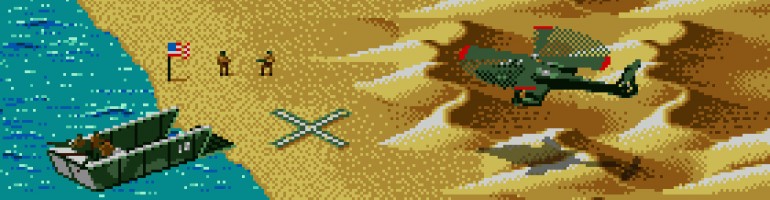
The mangled corpses of your enemies, yesterday.

[The FOURTH CYCLIST enters carrying a large box wrapped in a bin bag with a note saying 'TAKE ME' pinned on the side.]

FOURTH CYCLIST: Hey guys, look what I found! Someone just left it lying around outside the front of their house!

[The FOURTH CYCLIST whips away the bin bag with a flourish to reveal an Amiga 500+ with a stack of games.]

THIRD CYCLIST: Cool! Hey you know that reminds of that time at Amiga Power – you know, when we brutally slayed the entire staff?

[The others stop what they're doing for a moment and gaze thoughtfully at the ceiling.]

FIRST CYCLIST: Oh yeeeahh! I’d forgotten about that!

[The Four Cyclists meditate on the thought for a moment, with wistful smiles playing across the voids where their faces should have been. The SECOND CYCLIST stands and claps his hands together, breaking the others out of their reverie.]

SECOND CYCLIST: Right! Shall we see if it works then?

Cannon_Fodder_recruits

'Cunning Metaphor For The Futility Of War', more like.

[Half an hour later the cyclists are gathered around a dilapidated TV listening to the A500 disk drive grind and sputter its way back into life.]

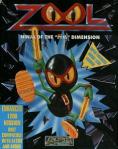
FOURTH CYCLIST: Right, what shall we play on then? Zool?

THIRD CYCLIST: Frankly I just have one thing to say to that: ‘up to jump‘.

FIRST CYCLIST: How about Cannon Fodder, the Game of Champions?

[Ten minutes later the quartet are watching the words 'This game is not in any way endorsed by the ROYAL BRITISH LEGION' appear on the screen, immediately followed by a giant poppy and the words 'CANNON FODDER'. The accompanying music is 'War Has Never Been So Much Fun'.]

SECOND CYCLIST: Reminds me of all that fuss about the poppy on the front cover of the game. Yet despite all the Daily Star’s accusations of warmongering and insensitivity, the game actually carried a distinctly anti-war message, as evidenced by the fact that your new recruits queue up in front of the graves of the newly dead – surely a potent image of the futility of war?

THIRD CYCLIST: Errr… yeah.

SECOND CYCLIST: Not to mention the fact that every soldier in the game had a unique name, which meant you couldn’t help but grow attached to your recruits as they steadily moved their way up the ranks. Seeing your favourite general die halfway through the game was nothing short of a tragedy – and by extension, this emphasised the tragedy of death in real-life combat.

THIRD CYCLIST: Yeah, it was annoying when they died.

1242577203-01

Igloos and snowmen were a common occurrence in Cannon Fodder. Natch.

SECOND CYCLIST: Erm, I’m not sure you’re really getting this are you? The point is that in most war games you’re in control of nameless goons or some ridiculous super-soldier that can be resurrected at the touch of a button, and as such you never really end up caring about them. But by giving the soldiers individual names, Cannon Fodder succeeds in creating a bond between the player and the game characters, and their very fragility and the permanance of their death serves to strengthen this bond. Because you know that your character can be killed by just a couple of shots, and that if he dies he’s gone forever, you take extra care to look after him. Do you see?

FIRST CYCLIST: YES!!! GOT HIM! DIE YOU MOFO! Right, that’s level 1 done, anyone else fancy a go?

THIRD CYCLIST: ME ME ME!!!

SECOND CYCLIST: Sigh.

Lewis

(Hang on – what on earth was all that about? – Ed)

Sorry, it’s a review In The Style Of… Amiga Power. You can read more about the mighty beings of Amiga Power by cruising down the InformationSuperHighway to this CyberInfoDump. If you didn’t find any of this in the slightest bit interesting or amusing, then you probably used to read (“Michael Jackson” – Ed). Tsk.

Friday 13 November, 2009

#37: Sega Bass Fishing

Format: Dreamcast Genre: Fishing Released: 1999 Developer: Sega

I love this game because it’s just such an unlikely concept: who’d have thought fishing could be so much fun? It’s a bit like the TV show Late Night Poker – explain the concept to someone and they’ll probably roll their eyes in boredom, but when you see it in action you suddenly find yourself addicted. Likewise with Sega Bass Fishing – get past the naff-sounding concept and one go is all you need to get you hooked (sorry).

Sega Bass Fishing Dreamcast Box

The best bit about the whole game is the sampled speech – I’ve no idea where they found the guy who does the voiceover, but he’s absolutely priceless. I’ve never heard anyone strangle the English language in quite such a fantastic and delightful way as he does – just click on the video below and have a listen to him say “select a casting point” to hear what I mean. The best bit is when you catch a big fish, which triggers a crescendo of J-pop guitar riffs followed by the voiceover guy excitedly booming “WOOOAH!!! A BIG ONE!!!” as your avatar struggles under the weight of an enormous bass.

bg01_640w

The game is so dependent on sound that if you took away the wonderfully over-the-top music and speech, I reckon the game’s appeal would easily be halved. The act of reeling in a fish would actually be quite dull without the blare of hyperactive guitars reverberating in your ears and some ambiguously accented narrator demanding that you “LOWER THE ROD!!!” (with ‘rod’ pronounced ‘raaard’). Perhaps real-life fishermen would do well to hire someone to stand behind them and excitedly comment on everything they’re doing – it might make the time pass quicker.

bg02_640w

In addition to the sound, the other main appeal of this game is of course the motion-sensitive fishing rod controller (dubbed the ‘Fission Controller’ by some wag). Motion control is two-a-penny now, but it was a real novelty back in 1999, and anyone who saw me playing with my rod would often be astonished by its capabilities (sorry, couldn’t resist). I seem to remember that the controller wasn’t all that sensitive, and it was certainly nowhere near as responsive as the Wii controllers, but it did the job well enough. And let’s face it, the game wouldn’t be half as much fun without the plastic fishing rod.

Speaking of which, has anyone played the Wii version? I’ve been very tempted to buy it for old time’s sake, but I’m not convinced that it would be quite the same without the proper controller…

bg09_640w

Of course, the game wasn’t without its down sides. The chief disappointment was that it became repetitive quite quickly, although this was diminished somewhat by the ability to unlock extra lures. Even so, the game was quite limited in that it only had three levels (actually, I think it was four including the special stage) and just one type of fish to catch – after hours and hours of fishing for bass I was crying out for a bit of variety (“A perch! A perch! My kingdom for a perch!” etc.).

That said, the game had excellent pick-up-and-play appeal, and I found myself dipping into the arcade mode again and again, long after I’d grown tired of most of my other Dreamcast games. A true classic.

Lewis

(Screenshots from www.ign.com)

Thursday 12 November, 2009

#36: Tetris

Format: Game Boy Genre: Puzzle Released: 1990 Developer: Nintendo/Bullet Proof Software

This was the game that started my gaming habit. I may have dabbled with gaming before this, but in 1990, at the tender age of 11, video games finally smothered me with their all-suffocating love. No more Airfix kits for birthdays please mummy, give me Nintendo.

Tetris Game Boy Box

Picture the scene: Christmas morning, 1990. Having been whipped into a frenzy of excitement by Nintendo’s relentless primetime TV ads, my sister and I had asked for a Game Boy for Christmas – and because it was such an expensive present, we’d agreed to share it between us. But wait, what’s this? TWO presents under the tree? Could it be…? YES! Our wonderful parents had given us a Game Boy EACH! AND an extra game each too! (Duck Tales and SuperMarioLand if you’re curious). Even now the recollection brings a smile to my face, and opening that present still ranks as one of my fondest childhood memories – who says kids can’t be bought?

Tetris Game Boy Screenshot 1

A joyous Christmas morning followed as my sister and I got down to the serious business of two-player Tetris while mum and dad cooked the turkey. Happy days! The only sadness arose when mum tried to get us to stop playing and eat our lunch. Alas, had she known that her children would be turned into gaming zombies, perhaps she would have bought us something else for Christmas instead. Possibly Meccano. Actually, were they even making Meccano in 1990? Come to think of it, what do kids get for Christmas nowadays if not computer games? iTunes vouchers?

Tetris Game Boy Screenshot 2

But I digress. Having dipped my toe in the gaming waters, I proceeded to dive headlong into the hallowed pool, and for months afterwards I could be found with my head buried in various gaming magazines, excitedly plotting which games to save up for with my £1 a week pocket money. To be honest, I grew bored with Tetris fairly quickly (I can almost hear the sharp intakes of breath from the readers – sacrilege!), but I think it deserves honouring as the game that really kick-started my fascination with games, as well as my long-held playground allegiance to Nintendo.

Original Game Boy with Tetris

Before I finish though, I have to mention the fantastic music. Of course, everyone remembers the main Tetris theme, but the other two tunes in the game were pretty damn good as well (if not better). I’ve included YouTube links to all three tunes below so you can judge for yourself – I think they’re some of the best (if not the best) 8-bit music out there. Can anyone think of any better 8-bit soundtracks? The only music I can think of that comes close is the soundtrack to Super Mario Bros. 3…

Lewis

Tetris A-type music.

Tetris B-type music.

Tetris C-type music.

Tetris gameplay video.

Wednesday 4 November, 2009

#35: The House of the Dead: Overkill

Format: Wii Genre: Light Gun Game Released: 2009 Developer: Headstrong Games

The House of the Dead: Overkill

'Mutherhugger' (taken from www.blast-o-rama.com)

It’s finally here, the first 101 Video Games That Made My Life Slightly Better podcast! Click play below to hear two very well spoken boys quietly speak in very posh voices about The House of the Dead: Overkill. Be amazed as we get a bit too excited and talk over each other. And be slightly concerned as our mums come up in the conversation.

Enjoy, and don’t be too cruel in the comment section.

Monday 2 November, 2009

#34: Commandos: Beyond the Call of Duty

Format: PC Genre: Real-Time Tactics* Released: 1999 Developer: Pyro Studios

I’m not even sure if I actually like this game or not, but I feel it deserves inclusion for the simple fact that it dominated my life for a week or so in early 1999 or thereabouts. Whether it made my life better or just scarred me for life is up for debate…

Commandos Beyond The Call Of Duty Box

In early 1999 I was in the first year at university, and one of my friends in halls had a one-level demo of Commandos: Beyond the Call of Duty on his PC (incidentally, the game is a standalone expansion pack for Commandos: Behind Enemy Lines, which was released the previous year). The idea of the game is simple – you control a squad of commandos (sniper, driver, spy, green beret, etc.) and the aim is to sneak around behind enemy lines performing various acts of sabotage and assassination. However, the actual execution (if you’ll forgive the pun) is mind-numbingly difficult – if you’re spotted by one of the enemy troops, it’s pretty much game over, which means you have to plan every single move in excruciating detail.

Commandos Beyond The Call Of Duty screenshot 1

Before moving anywhere you have to scope out the patrol paths and lines of sight of all of the enemy guards to ensure you don’t end up wandering across any wayward Germans. This generally equates to crawling around painfully slowly and hiding behind bushes – as you might have guessed, this definitely isn’t an action game. In fact, shooting anyone is practically committing suicide, as the sound of gunshots draws in every German from the surrounding area, resulting in a quick death for Johnny Englishman. The only way to really progress safely is to sneak up behind each enemy and dispatch them silently before hiding the body – no mean feat when the level I played was approximately the size of Normandy (you can see why it took me a week to complete one level).

Commandos Beyond The Call Of Duty screenshot 2

The cautious nature of the gameplay and the massive penalties for detection meant that I had to save the game after practically every move I made, and there were several occasions where I had to backtrack to a previous save point and redo a whole section of the level because I’d gone the wrong way or found myself in an impossible situation. God knows where I got the patience from.

However, as they say, the greater the challenge, the greater the reward, and the sense of achievement I felt on completing the demo was utterly amazing – somehow the elation of triumph over adversity overshadowed all the hardship and frustration. I imagine it’s the same kind of feeling as being trapped down a mine for a week and then stumbling, squinting and bewildered, into the sunshine, safe in the knowledge that you can happily get on with the rest of your life.

Commandos Beyond The Call Of Duty screenshot 3

That makes it sound like the game was a chore to play, but that’s definitely not the case – frustrating and difficult it might have been, but it was also extremely rewarding, not to mention very pretty to look at (I reckon the hand-drawn graphics still stand up pretty well today). Then there’s the fantastic sound effects, the speech in particular. The green beret (I think it was the green beret anyway) said everything in a wonderfully sneering tone, and ordering him to move anywhere would elicit a sarcastic “Yes… sir“.

But does the game stand up today? The inspiration for this post came from seeing Commandos 2 on the PS2 for a ludicrously low price in a game shop over the weekend. I couldn’t resist picking it up for nostalgia’s sake, but I was bitterly disappointed when I got it home – after less than an hour I’d become utterly frustrated with the glacial pace of the gameplay and the constant restarts. Perhaps this game is best regarded as a fond memory. Or at least as a worthwhile exercise in endurance.

Commandos Beyond The Call Of Duty screenshot 4

Although having said that, the PS2 conversion was utterly dire – the attempt to map the various controls to a joypad resulted in probably the least intuitive control system I’ve ever had the misfortune to experience. Plus it had the most tedious tutorial I’ve ever seen in a video game, but I had no choice but to sit through it because the controls were so damn complicated that I didn’t have a hope in hell of playing otherwise.

Still, these days I prefer my gaming in bite-sized chunks – I just don’t have the time to play games like this anymore. Anything that requires me to play a level for an hour or more – let alone a week – just doesn’t get a look in. Aaah, to be 19 again, with acres of spare time spread in front of me…

(This is actually a video of Commandos: Behind Enemy Lines, but you get the idea.)

Lewis

*Bit of an odd genre this – Commandos was an early example of a real-time tactics game, but Cannon Fodder (which will be appearing on the list soon) was one of the very first. A list of RTT games can be found here.

(Screenshots from www.gamespot.com)

Wednesday 28 October, 2009

#33: Doom

Format: Playstation Genre: First Person Shooter Released: 1995 Developer: id

Ah, good old Doom. I remember when it originally came out in 1993 – suddenly it became cool to own a PC, which up until that point had been the sole preserve of flight sim enthusiasts and Civilisation fans. As an Amiga owner I could only seethe in jealousy as my PC-owning mates regaled me with tales of besting Cyberdemons, while I made do with Alien Breed 3D and Gloom. After a long wait, I finally got my chance to engage the hordes of hell in 1995, with the release of Doom on Playstation.

Doom playstation box

Looking back at this game, it’s just amazing how simple it is – things that we take for granted in modern FPSs (like the ability to look up and down) just didn’t exist in 1995. Then again, if the protagonist of Doom managed to defeat the army of Hades without looking up once, perhaps the ability to swivel your viewpoint vertically is overrated. Yes, looking up is definitely for wimps.

Doom playstation screenshot 1

Of course, the best bit about Doom was the multiplayer. I clubbed together with my mate round the corner to buy a link cable, and seemingly every day in the holidays he would schlep round to mine with his Playstation for a bit of a Doom sesh. In the current climate of massively multiplayer FPSs, two player link-up Doom seems almost quaint, but for most of 1995 it sucked up my spare time like a supermassive black hole.

The single-player mode was pretty addictive too. The need to find all of the hidden rooms in the game held an extremely seductive allure, and I remember spending most of the game rubbing up against walls while fumbling with the ‘open’ button. I seem to recall there was a hidden disco room, but I can’t find any screenshots of it – can anyone help?

Doom playstation screenshot 2

Then there were the enemies – considering they were just pixellated 2D sprites pasted onto a pseudo-3D background, they did a pretty damn good job of being scrotum-tighteningly scary – there’s nothing more likely to give you a coronary than rounding a corner and running slap bang into a Cyberdemon.

However, my favourite baddies were the fantastically named Cacodemons – which were sort of like massive red floating Madballs that spat fire instead of water. Fun and scary.

Doom playstation cyperdemon

I’ve just had a thought – were there any other Playstation games that used the link cable? The only one I can think of is Command & Conquer: Red Alert, but there must be others… It’s funny, that link cable cost us twenty quid, and the only game we ever used it for was Doom.

Still, it was worth every penny.

Lewis

Monday 26 October, 2009

#32: Killer Instinct

Format: Super NES/Coin-Op Genre: Fighting Released: 1994 Developer: Rare

Killer Instinct was fantastically naff really. The character designs were generally uninspired and the graphics had an odd sheen to them that made it look like everything had been sprayed with cooking oil. On top of this, most of the levels were incredibly murky (possibly in an attempt to make the game seem ‘darker’ and more adult), so the effect was a bit like watching bits of foil leaping about down a well. However, it was enormous fun to play, so that made everything all right.

killer_instinct_SNES

When the game came out, most gaming magazines trumpeted the fact that it was based on hardware from the long-awaited ‘Ultra 64′ (later rebranded with the decidedly more prosaic name ‘Nintendo 64′ when it was released two years later). As it turned out, this was all complete rubbish, and Killer Instinct actually turned up on the Super NES the next year, which somewhat tarnished its ‘next-generation’ image in my eyes (although it was hugely impressive that they managed to squeeze the whole game onto a SNES cartridge – obviously Rare is staffed by tiny gaming wizards with magic compression wands).

(Incidentally, Killer Instinct emerged at about the same time as Cruis’n USA, another game that was thought to be based on Ultra 64 architecture – unlike Killer Instinct however, Cruis’n USA was entirely bobbins and not really the best of adverts for Nintendo’s new console. Even if it wasn’t actually developed on one. Does that make sense?)

Killer Instinct ready screen

Killer Instinct fought its way into my life when I was going through the teenage phase of hanging around McDonald’s for want of anything better to do. Calendars, the American-style diner next door to MaccyD’s, decided to install a single Killer Instinct arcade machine right in their entrance hall, presumably to keep customers entertained while they were waiting for a table. Not that we ever let the actual customers have a go on it, although thanks to this particular coin-op my friends and I made a substantial contribution to Calendars’ revenue during the summer of ‘95.

Killer Instinct Cinder

The game’s biggest gimmick was its combo system, which went above and beyond the call of duty – if I remember rightly, some characters could even deliver 56 hit combos (which I imagine would have been intensely irritating for the recipient).* My friends and I spent most of that long, hot summer poring over combo lists in the backs of game magazines, desperately trying to make longer and longer combos. I think the best I ever managed was 24.

Killer Instinct 80 hit Combo

Looking back, there were probably better things I could have been doing that summer than hanging around in the entrance to a restaurant and memorising complicated lists of button presses. But for the moment they escape me, as all I can think about is laying the smack down on shiny robot knights and Harryhausen-esque skeletons…

Hey, I wonder how much  Killer Instinct goes for on eBay…?

Lewis

*Although from the screenshot above, it looks like an 80 hit combo was possible. Cor, and indeed, blimey.

However, it was enormous fun to play, so that made everything all right.